As we toured cities on the Rhine River, we came across little memorials embedded in the sidewalk. Our tour guide in Strasbourg, France, explained that they were stolpersteines or “stumbling stones,” placed there to commemorate the lives of Jews, Sinti and Roma, politically persecuted people, homosexuals, Jehovah’s Witnesses and euthanasia victims of National Socialism
The little memorials were conceived by artist Gunter Demnig in the early 1990s. They are placed in front of homes where the Nazis captured persecuted persons and sent them to concentration camps. Each stolpersteine begins with the words “Here lived” and provides information about the person being memorialized. In the case of Alfred Toczek, below, he was deported in 1941 and sent to Mauthausen, a Nazi concentration camp in Austria.
As of August 2024, the project had placed over 107,000 stones in nearly 1,900 municipalities in Austria, Belgium, Denmark, Germany, Finland, France, Greece, Great Britain, Ireland, Italy, Croatia, Latvia, Lithuania, Liechtenstein, Luxembourg, the Netherlands, Norway, Poland, the Republic of Moldova, Romania, Russia, Sweden, Switzerland, Serbia, Slovakia, Slovenia, Spain, the Czech Republic, Ukraine, and Hungary.
We came across a few stolpersteines in Strasbourg and Koblenz, but saw them more frequently in Amsterdam, where we spent several days.
Jurriaan Haak and Henriette Haak Van Eek were taken by the Nazis in 1943 when they were in the 50s. They were sent initially to the Vught concentration camp in the north of the Netherlands. Vught was a transit camp from which Dutch Jews were sent to extermination camps. Jurriaan was sent to Sachsenhausen; Henriette was sent to Reichenbach.
In some instances the Nazis moved quickly to kill the persons they arrested. Two members of the Messias family were captured in Amsterdam on November 4, 1943. Both were in their 70s and were murdered in Auschwitz fifteen days later, on November 19, 1943. At their age, the Nazis had little use for them. Mary Messias successfully avoided capture and survived.
This sidewalk in front of this house at 43 Jacob Obrechtstraat in Amsterdam has nine stolpersteines, including six memorializing members of the De Hoop family.
Members of the De Hoop family were captured in Amsterdam on February 6, 1943 and put to death in Aushwitz six days later.
In places where hundreds of stolpersteines would need to be placed. the project lays a stolperschwelle, or stumbling threshold, that memorializes the group. Fifty stolperschwellen have been placed, although we did not come upon any of them.
For more information about the Stolpersteine Project you can go to its website.
At the end of each year, I look back at what I have accomplished in the past twelve months and look forward to the next twelve. I spent most of my “photography time” this year with my nose in the books, preparing and delivering lectures on the history of photography. But, along the way, I of course found the time to get out with my camera. Here’s a brief review of my activities and some favorite photos from 2025.
Hitting the Lecture Circuit
As in 2024, a major focus of my photographic activity involved researching the history of photography and the impact on it of artificial technology. I presented two lectures on the history of photography at the Hope Academy of Senior Professionals, the lifelong learning program at Hope College. These lectures, titled “Editing Reality: The History of Manipulated Photography,” were similar to the ones I gave last year at the Osher Lifelong Learning Institute (OLLI) at Aquinas College in Grand Rapids. The lecture on artificial technology has to be continually updated as the technology continues to develop.
In addition, I presented a new lecture for OLLI titled “On the Road: Photographing America in 1955.” That lecture related the story of two photographers, Robert Frank and Todd Webb, who were each awarded a Guggenheim Fellowship in 1955 to travel across America, Frank by car, Webb on foot and by skiff and bicycle. Frank’s photos were published in the classic book “The Americans,” which would influence a new aesthetic in photography, while Webb’s photos went virtually unseen until they were rediscovered in 2016. The lecture looked at both projects to see what they have to tell us about photography and America in the mid-fifties.
Doing the research for this new lecture was time-consuming but rewarding. I had the opportunity to visit an exhibit of photographs from Frank and Webb’s Guggenheim projects at the Brandywine Art Museum in Chadds Ford, Pennsylvania. And, I was fortunate that the Todd Webb Archive shared with me the entries in Webb’s unpublished daily journal from 1954 through 1956. Webb’s journal provided me with several insights into a remarkable photographer – and Michigan native – who was prominent in the 1950s but has been overlooked for decades.
Some of My Favorite Photos from 2025
Of course, I was out taking photos during the year, although not as much as I wanted. Life happens and sometimes hobbies have to be set aside. I have looked back over the images I took this year and have selected a dozen that I am particularly fond of.
On a cold day in January, the frost on one of our windows and screens caught my eye.
In March, I set out to photograph of the Milky Way, which I thought would begin making its appearance above the horizon. My calculations were off, but I did get a photograph of the night sky that was the reward for standing on the shore of Sleeping Bear Bay on a dark, cold night.
In June, I spent a week in Glen Arbor, Michigan, with my family and was able to get out early in the morning and on a couple of evenings. I took this image as the sun was setting. A 10 second exposure softened the clouds and smoothed the water, making for a tranquil photograph.
On the same trip, I visited my favorite tangle of roots on the shore of Lime Lake. On some future visit to this site, I am sure the roots will have lost their grip and the cedar trees will have succumbed to the water. But for now they are holding firm. I have photographed in this location several times. The challenge is always to come up with a different perspective. This time I chose to take the photo looking out towards the lake, framed by two, old cedar trees that themselves are firmly rooted in terra firma.
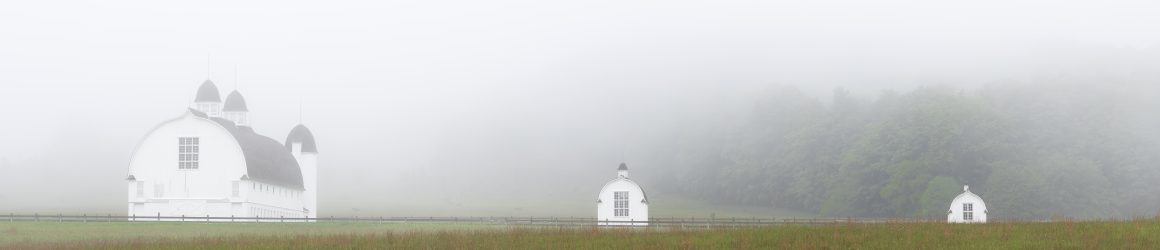
On a visit to North Bar Lake on a foggy morning, I came across these sandhill cranes marching in unison along the shore.
Back home on the Fourth of July, I captured the joy of chasing bubbles at the annual Hollyhock Lane Parade.
On a trip to Massachusetts in a community garden I came across these Garden Phlox that seemed to be exploding towards my lens.
In August, we took a cruise down the Rhine River from Basel, Switzerland, to Amsterdam. Of all the photos I took, this one may be my favorite. We were in the Kunstmuseum in Basel and I saw this scene nicely framed by the window. The window shade softened the scene. It could have been a picture, so I took one. There’s no accounting for taste.
The Middle Rhine passes through an area of steep hills with vineyards and castles. The area has been designated as a World Heritage Site. It is beautiful. As you can imagine, I took lots of photos. But as you get north of Cologne, Germany, the river becomes more industrial. I found it just as interesting as the Middle Rhine.
Back home in late August, I visited the mouth of the Platte River in Sleeping Bear Dunes National Lakeshore before sunrise, but not before the fisherman were out to take advantage of the beginning of the annual salmon run.
Later that same day, I sat on the deck of The Mill in Glen Arbor and enjoyed a cup of coffee and the reflections in the Crystal River.
I was able to get out one last time in November, before the woods filled with deer hunters. This tree has been lying on the ground for years. Each time I see it with its u-shaped base, I wonder what it must have looked like before it fell.
Looking Ahead to 2026
I am excited that one of my photos has been accepted into a juried exhibit at the Glen Arbor Arts Center. The exhibit is titled “INteriors” and explores inner spaces, both real and imagined. I submitted this image, a composite I created by blending two self-portraits in Photoshop to convey a sense of introspection.
My artist’s statement reads: “As a photographer, I am always looking outward, assessing how I would compose an image of the scene that is before me. At the same time, I am looking inward, searching for something that resonates inside me and tells me it is time to press the shutter.”
INteriors opens on Friday, January 9, 2026, and runs until March 12.
In the spring, I will be giving two more lectures. On April 25, at 1:00 pm, I will be giving a talk on digital photography and the impact artificial intelligence at the Glen Arbor Arts Center. Then, on May 5, at 1:30 pm, I will presenting “On the Road: Photographing America in 1955” for the Lifelong Learning program at Kellogg Community College in Battle Creek, Michigan.
On September 11, 2001, terrorists hijacked four planes. They flew two into the twin towers of the World Trade Center and another into the Pentagon in Washington, D.C. The fourth plane, left Newark, New Jersey, bound for San Francisco. Near Pittsburgh, the terrorists overwhelmed the pilots and took control of the plane turning it towards Washington, presumably to crash it into the United States Capitol building.
Passengers and crew members, having become aware of the attacks on the World Trade Center and the Pentagon, voted to fight back. Knowing their fate, they struggled with the terrorists to prevent them from achieving their goal. Sensing that they would be overcome by the passengers and crew, the terrorists crashed the plane into a field on a hillside near Shanksville, Pennsylvania, just 18 minutes from their intended target in Washington.
Today, the National Park Service maintains a memorial at the site, a field of honor forever.
The Visitor Center has a sobering display that recounts the events of that day. Videos of news reports from 9/11 took me back to that morning, when I sat in a conference room with colleagues from my law firm watching intently as events developed. Our country was under attack. Most haunting in the display is an exhibit where you can listen to voicemail messages left for loved ones by the passengers and crew who knew they were going to die.
A platform at the Visitor Center looks out over the field where Flight 93 crashed. Photos of the scene in the Visitor Center show a crater in the shape of a plane after the crash. The plane and its contents were all disintegrated, leaving only fragments of the plane and its passengers and crew.
The National Park Service has erected a memorial on the field where the plane crashed. A long walkway leads to a memorial wall where the names of all forty of the passengers and crew are listed. The day we visited a delegation from the Wisconsin State Patrol conducted a ceremony to honor them.
On a small shelf in the wall leading to the memorial, people leave mementos and tributes.
Each passenger and crew member is named on a separate panel of the accordion-shaped wall, which aligns with the flight path of the plane as it crashed.
A Ceremonial Gate is constructed from hemlock beams. There are forty cut angles in the beams to commemorate the dead.
A massive boulder marks the spot where the plane crashed.
The Tower of Voices, a 93-foot tall tower, has forty wind chimes that make music to honor the forty passengers and crew members who died fighting to prevent the terrorists from crashing the plane in Washington, D.C. Having heard of the crashes at the World Trade Center, the passengers and crew members knew their fate, but they rose up to prevent a greater tragedy in our nation’s capital. On September 11, 2001, this common field became a field of honor forever.
After many years hosted on Posterous.com, I have moved the blog to WordPress. The Posterous.com site, which was so convenient, has been taken down by its new owners. If you are listening former Posterous developers and workers, thank you for coming up with a great site that prompted me to begin this site where I can keep track of, and share, my Internet discoveries.
So here is the best commencement address I have heard this year, presented by Wellesley High School English teach David McCullough. His speech is reprinted in the Boston Globe at http://bit.ly/KUlGa1.
I like listening to commencement addresses. Well, some commencement addresses. Most, of course, seem to be filled with cliches and banalities that will never be remembered and don’t deserve to be. But the rite of passage that is commencement on occasion is marked by extraordinary speeches that convey profound and timeless thoughts. Such is the case with David Foster Wallace’s commencement address to the Kenyon College Class of 2005. I missed it by only a year. My son graduated from Kenyon in 2006. His commencement speaker was Senator John Kerry. Senator Kerry’s presence on the dais had special meaning for the Class of 2006, for in the 2004 election Kenyon students overwhelmed the voting apparatus, showing up in such numbers that the polls had to remain open until the wee hours of the morning. Kenyon graduates were proud of that, and rightfully so. But today, I remember none of what Senator Kerry had to share that day.A few years later, while on a tour of east coast colleges with my daughter, I came across a little book in the Dartmouth College Bookstore called “This Is Water.” It was an essay based on David Foster Wallace’s 2005 commencement address. The subtitle describes the central theme of the address: “Some Thoughts Delivered on a Significant Occasion about Living a Compassionate Life.” I have read it several times.Today, in searching for new commencement addresses to add to my favorites list, I came across a recording of David Foster Wallace’s address. What a pleasure to hear him deliver the speech. It is right at the top of my list. Here are links to the speech, in two parts. I commend it to you.Part 1: http://www.youtube.com/watch?v=M5THXa_H_N8&feature=youtube_gdata_player Part 2: http://www.youtube.com/watch?v=uSAzbSQqals&feature=youtube_gdata_player