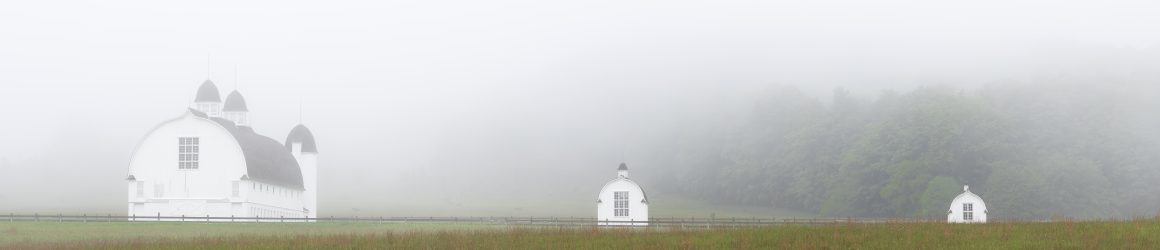
We are experiencing clear skies and bright sun, a welcome change from January’s clouds. Here are a few photographs from a visit this morning to Reeds Lake in East Grand Rapids.


We are experiencing clear skies and bright sun, a welcome change from January’s clouds. Here are a few photographs from a visit this morning to Reeds Lake in East Grand Rapids.
At the end of each year I look back at the images I have taken and select several to highlight in a year-end post. This year I have selected 15 photos to share and discuss. Whether these images are my “best” or not, I am not sure. But, they are all images that gave me a sense of achievement in expressing my vision.
Winter Scenes
I will start with four images I took in the winter. Winter is my favorite time to do photography. I love being outside in the winter. I find the cold and the snow to be invigorating. Snow can be a landscape photographer’s friend helping to reduce the chaos that so often typifies a scene in nature, especially in a woodland. I have photographed this sumac several times over the years, but found it difficult to get it to stand out from the trees behind it. I made this photograph in a snow storm, which helped to reduce the chaos in the scene, creating separation between the twists and turns of the sumac and the forest in the background.

I first came across this lone tree in a farmer’s field in the fall of 2021. I described it then as one of my “U-Turn” photos – a scene that caught my eye as I was driving by and caused me to do a u-turn. It happened again this past winter. I drove by this tree while it was snowing and again did a 180 and pulled off by the side of the road. A lone tree is a frequent subject for landscape photographers. It can evoke a range of emotions, such as isolation, tenacity, or independence. Having captured a photo in the fall and winter, I will have to return to this spot in the spring and summer to document it in all four seasons.

Walking along Shalda Creek where it enters Good Harbor Bay in the Sleeping Bear Dunes National Lakeshore, I saw these stones frozen in ice. As I photographed them, a haiku came to mind:
Stones encased in ice
Imprisoned by winter’s cold
The beach in February
A good photograph has something in common with a haiku. A haiku expresses its meaning in three spare lines – no wasted words or syllables. In a photograph, everything has to contribute – no extraneous things to distract from the subject.

On my frequent drives to the Leelanau Peninsula, I pass the Weldon Township Cemetery in a clearing cut from the forest. I have stopped several times to try and capture the emotion of the scene without success. But, the winter’s snow helped to emphasize the simplicity of this hallowed place and to convey a sense of repose and honor.

My Swan Vigil
In March, I went for a walk along Reeds Lake in East Grand Rapids, Michigan, and came across a swan sitting on a nest. I continued to visit the nest for two and a half months, hoping to be able to document the hatching of the swan’s nine eggs. The eggs never hatched, but I was able to put together a blog piece on my vigil. Here is the link. The male swan (the cob) was very protective of the nest. In this first photograph, the swan is taking off to confront another pair of swans a couple hundred yards away – apparently too close for the cob.

In the area of the swans’ nest there were many nesting geese. The cob policed the area to let the geese know their place in the order of things. Photographing birds was a challenge for me. I take photos of landscapes with my camera on a tripod, often with a long exposure time. I have the luxury of time to frame a shot and try different apertures and focal lengths. But birds don’t wait for you. You have to react and hope that you snap the photo at the decisive moment. I learned to observe and anticipate.

Iceland
In September, my wife and I visited Iceland. We concentrated our journey in Reykjavík, on the Snæfellsnes Peninsula, and along the southern coast. Iceland is an amazingly beautiful country. Berserkjahraun, seen below, is a vast lava field on the Snæfellsnes Peninsula that formed 4,000 years ago. The lava field is covered with moss and lichen and offers a stunning view with mountains in the background.

I had never photographed the northern lights before. I got the opportunity when we rented a cottage on the southern coast, near Kirkjubæjarklaustur. We watched for nearly four hours as the aurora filled the night sky. The naked eye saw only the greenish colors, which danced in the sky. But, a longer exposure – nine seconds or so – captured the magenta.

On the southeast coast of Iceland is Jökulsárlón, a glacial lagoon dotted with icebergs that break off a glacier and make their way to the sea. My eye was attracted to the layers of tones in this scene.

Iceland has over 10,000 waterfalls. Probably the four most visited falls are Öxarárfoss at Þingvellir, Gullfoss on the Golden Circle, and Seljalandsfoss and Skógafoss along the south coast of the country. All have large parking areas to accommodate the tourists who flock to the sites. We ventured off the main highway to a less visited waterfall, Gluggafoss, also known as Merkjárfoss, where we had the site almost to ourselves (other than the one woman in a bright red coat who kept walking into my photo while talking on her cellphone). Gluggafoss falls in two stages and has a total height of 171 feet. The lower falls are captured in the photo below.

Black and White
I continue to try to develop my eye for processing photos in black and white. Gluggafoss rendered well as a black and white photo, with a broad range of tones.

Back home in Michigan, I look for scenes that I think will be effective in black and white. Processing in black and white reduces a scene to its essence. It relies on structure and form, light and shadow to carry the photograph’s meaning. The great Magnum photographer Elliott Erwitt, who died in November, said of black and white photography, “Color is descriptive. Black and white is interpretive.”

I am attracted to the roots of trees, so I was excited when I came upon these cedar trees along the shore of Lake Michigan. Waves had eroded the shore exposing the lateral roots and tap root that have supported the trees for tens of years. Another period of high water and waves will likely mean the end for these trees.

I was recently studying the work of Wynn Bullock and came across his solarizations. Solarization is a technique in analog photography perfected by Man Ray. When developing film in the dark room, Man Ray would briefly flick on the lights which would invert some of the tones in the finished photograph. In my digital darkroom, I attempted to emulate this process by adjusting the tone curve in Lightroom, lifting the deep blacks while maintaining the midtones and highlights. I found it difficult to emulate solarization effectively, but I did like the effect my method had on this image of the cedar roots.

A Gift
Sometimes an image is simply a gift. I parked in a parking lot in Glen Haven, Michigan, hoping to take some long exposure photographs of waves coming ashore in Sleeping Bear Bay. As my luck would have it, the bay was virtually still that day. When I walked back to my car, the sun had just crested a row of trees to the east lighting up these empty milkweed pods. Simple and beautiful. The experience brought to mind another quote by Elliott Erwitt: “To me, photography is an art of observation. It’s about finding something interesting in an ordinary place. . . I’ve found it has little to do with things you see and everything to do with the way you see them.”

Thank You
If you have gotten to this point, thank you. Over the course of the past year, I have become less and less interested in posting photos to social media sites like Instagram, where people breeze by the photos, swiping left or right, giving little time to each image. So I appreciate your giving me the gift of your time to look at and consider the photos in this post.
Here are links to my my year-end review of images in 2019, 2020, 2021, and 2022.
Beginning in mid-March, I made frequent visits to observe a pair of nesting swans on Reeds Lake in my hometown. It was an exciting time, as some birds migrated through and others set about the business of raising a family. My photos of the swans and there story can be found here. Below is a gallery of some of the other birds and wildlife at the lake. (Clicking on an image may open it is full size..)


I have spent the last two-and-a-half months at a nearby lake, observing a pair of nesting swans. I have learned a lot about mute swans from reading and from observation. In this blog piece, I will share a few observations and some photographs.
March 18, 2023, was a blustery day in my hometown, a great day to do photography. So I grabbed my camera and went for a walk on a boardwalk that runs through a marshy area of nearby Reeds Lake. On my walk, I came upon a swan nest about 40 feet from the boardwalk. It wasn’t immediately noticeable since the swan and her nest were covered with snow.


I stood and watched for a while as the cob approached the nest and the two birds ultimately changed positions.

The pen left the marsh and headed out to open water to eat. The cob stood preening himself before eventually sitting on the nest.

The Eggs
On March 24, I got my first glimpse of eggs on the nest. As she would do throughout the gestation period of the eggs, the pen stood up briefly from time to time and rotated the eggs using her bill.

Mute swans lay an egg every day or two until their clutch is complete. On average, a clutch contains about six eggs. By April 5, the pen had laid nine eggs. The eggs were clearly visible on April 5, when the swans were busy raising the level of the nest. The night before, we had received close to 2 inches of rain and the lake water rose to within inches of the top of the nest. The cob and pen worked feverishly to add to the nest.

The nine eggs were clearly visible as the pen climbed back onto the nest.

A Note About Mute Swans
The Reeds Lake swans are mute swans, a species that was introduced to the northeast United States to decorate ornamental ponds and lakes in the late 19th and early 20th centuries. Escaped swans began to spread throughout the northeast. According to an account in the Petoskey News, mute swans were introduced into Michigan in 1918 near Charlevoix. The News reported that the swans were imported to Cedar Rapids, Iowa, from England by George Bruce Douglas. When the swans proved too aggressive to be among his children, Douglas moved them to Michigan, where the family spent its summers.
There were an estimated 15,000 swans in Michigan in 2010. With no natural predators, the population of mute swans in Michigan continues to grow by about 10 percent each year. The State of Michigan classifies mute swans as “non-native invasive species.”
Mute swans have a significant negative impact on the environment. According to the Michigan Audubon Society, “[t]he species’ capacity for consuming upwards of 8 pounds of aquatic vegetation per day while also dislodging an equal or greater amount, causes substantial damage to wetland habitats, reduces native floral diversity, and can decimate vegetation beyond the point where it can regenerate.” The Wilderness Society says its primary concern in Michigan is the impact mute swans have on threatened and endangered native species, including trumpeter swans and common loons.
Michigan’s Department of Natural Resources described mute swans as “[o]ne of the world’s most aggressive waterfowl species, especially while nesting and raising their young.” Mute swans will drive out other native waterfowl. The State’s official policy, adopted in 2012, is to reduce the spring population of mute swans in Michigan to less than 2,000 by the year 2030. The State has established procedures for the removal and destruction of nests and eggs.
Protecting the Nesting Area
As I continued to check in on the swans, I saw several examples of the aggressive behavior of the cob. Not far from the swan nest, a pair of geese established their nest with six eggs.

The cob was not happy with this at all. I watched for an hour one day as the cob threatened the goose and the gander. The cob parked itself within a few feet of the goose nest and alternated between resting its head under its wing and snapping at the goose and gander. The goose and gander stood their ground against the much larger swan.

I visited the goose nest the evening of April 28. All was well. When I returned early the next morning, the goose eggs and geese were gone without a trace, not even a broken shell. It is a mystery how the nest could disappear overnight. Did the cob finally strike? Cobs have been known to stomp on the eggs of other birds. But how can there be no trace?

I saw several other examples of the cob protecting its territory. Early one morning when I arrived, the pen was asleep on the nest, while the cob slept next to the nest in the water. Suddenly, the cob awoke and quickly left the nest, assuming an aggressive stance. I caught a photo of the swan taking flight to chase two swans that had landed halfway across the lake. I was amazed that the cob was alert enough in his slumber to sense that swans were present hundreds of yards away.

I watched on other occasions when the cob gave chase to geese in the marsh.


Reeds Lake
Reeds Lake is a 283 acre lake in East Grand Rapids, Michigan. From its furthest point in the east to its furthest point in the west, the lake stretches 1.22 miles. While most of the property along the shore has been given over to stately homes, the western shore includes the town’s middle school, city and public safety offices, library, a marina, and John Collins Park (which includes the East Grand Rapids High School crew team’s boat house), and a public boat launch.

The northwesternmost part of the lake is a marshland area adjacent to Waterfront Park and Hodenpyl Woods. A boardwalk extends through the marsh along a channel that leads to nearby Fisk Lake. The swan nest is just 40 feet from the boardwalk, in plain sight.

In the spring, the marshland attracts a wide range of returning and migrating species and it seems a similar number of birdwatchers. Male red-winged blackbirds are among the first to arrive. The males battle to establish to territory in anticipation of the females’ arrival a month later.


For a couple of weeks, American coots by the hundreds were on the lake as they passed through.

The coots are skittish birds and very difficult to get near, but they are great at providing early warning of approaching bald eagles. When an eagle comes near, the coots all quickly fly for cover in the reeds.

The marshland is home, or a temporary stop, for a wide variety of wildlife. I have posted a gallery of some of the photos of the inhabitants of the lake that I took on my visits.
Will they Ever Hatch?
As March turned into April and April turned into May, people observing the nest began to wonder whether the eggs would ever hatch. Mute swan eggs generally hatch 36 to 42 days after the pen lays her last egg. Miraculously, all of the eggs hatch on the same day. From my observations, I calculated that the pen laid her last egg around April 3 or 4. I have the photo of 9 eggs, which I took on April 5, and never saw more than that. Forty-two days passed on May 16. As I write this today, sixty days have passed since April 5. Nonetheless, the swans have not given up hope and continue to tend to the eggs.
It has been a long ordeal for the pen, who spends most of her time on the nest. I have read that the pen loses as much as 40% of her body weight while she sits on the nest. The pen gets up regularly to rotate the eggs and change her position on the nest.

The cob does change places with her from time to time. This “changing of the guard” tends to follow a certain routine. First, the pen stands up and tries to cover the eggs with loose down that is in the nest.

Then, the pen leaves the nest after the cob approaches. The first time I witnessed the change, the cob never climbed onto the nest. Instead, he stayed near the side of the nest and kept a watchful eye on the eggs.

When the cob does climb on the nest, he tends to stand and preen himself for about a half hour before finally settling down on the nest. When the swans get on the nest they often do so with outstretched wings.

As time has passed, the scene has changed dramatically from the snow-covered scene in March to a lush marshland in May and June. The swans have continued out of habit to add to the nest. Here the cobs sits on the nest on May 22 waiting for the pen’s return.

As May turned into June, against hope people, including myself, reached the conclusion that we would see no cygnets. Nonetheless, I have continued to visit the nest every day and marvel that the pen and cob continue their vigil. This morning, when I saw the pen peering back at me from the nest, I thought back to that day in March when I first saw the snow-covered pen.


It has been an interesting project for me to visit the nest each day. I have made many new acquaintances and renewed some old ones as we stood on the boardwalk wondering when the eggs would hatch. I have enjoyed getting a better attuned to nature and appreciating the wonder of renewal that spring brings. While it would seem to be a miracle if the eggs were to hatch now, I will continue to stop by the lake once or twice a day until the pen and the cob finally give up their vigil.


For over two months, I have been checking in on a pair of swans that have a nest with eggs on Reeds Lake in East Grand Rapid, Michigan. I have met a number of people who have also been observing the swans and promised them that I would share my photos on this blog once the eggs hatch. Well, as of late this morning, no cygnets yet. The swans are still sitting on the eggs. But come back later and hopefully the eggs will have hatched and I will be able to post the completed article with photos.
There’s a space below where you can enter your email address to follow this blog. If you do, you will receive a notification when I post to this blog. I do not sell the list of subscribers. Nor do I send newsletters or other email to anyone who subscribes. (If you have already subscribed to my blog, you do not need to do so again.)
A winter storm has blanketed the east coast with snow. This morning, in places like Washington, D.C., which is not accustomed to snow many inches deep, people are trying to figure out how to get around. I hope they will find a moment to take in the beauty. I paused this morning to take in the sunrise on the frozen lake in our small town.
“Only that day dawns to which we are awake.” Henry David Thoreau


