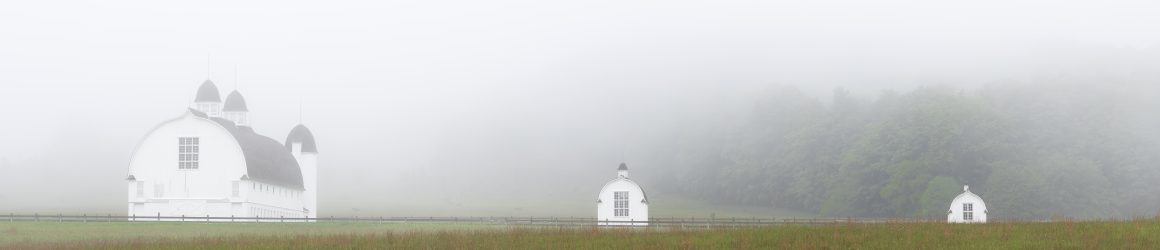
As I write this, 2024 is quickly coming to a close. Time once again to look back and select some photos from this year that I especially like.
This year was a little different from previous years because my main photography focus for the year was researching and preparing two lectures that I delivered in November at the Osher Lifelong Learning Institute (“OLLI”) at Aquinas College. The lectures were titled, “Editing Reality: The History of Manipulated Photography.” The first lecture dealt with the period before the digital age, while the second began with the digital age and got into the consideration of the impact of artificial intelligence on photography. I had a blast doing the research, reading a wide range of sources and, though the lectures are done, my reading continues to focus on the history of photography.
Incidentally, I was honored that OLLI sought my permission to use my photographs on their Fall and Winter Course Catalogs.


I am principally a landscape photographer who shoots in what some have termed, “the eyewitness tradition.” I edit my photos to create a realistic image that truthfully presents how I saw what was before me when I clicked the shutter. I do not use generative artificial intelligence or insert items into my images that were not before me. That said, this year I experimented making multiple exposure and montage images. There were two that I particularly liked.

I created this first image from three exposures taken of the side of a dumpster at the East Grand Rapids Public Works Facility. I blended them together in Photoshop. I rather liked the result.

This tree is one of my favorites. Standing alone in a farmer’s field, it reveals its majesty. On the day I took this photo, the sky was cloudless. While the sun was shining and the sky was a beautiful blue, to my eye, the sky offered nothing of interest. Photoshop now allows one to replace the sky with a menu of clouds. Doing so seems disingenuous and certainly would violate the eyewitness tradition I adhere to. Rather than create an artificial photo and present it as real, I chose to try something a little different – a composite of two photographs, one the photo of the tree and the field, the other an image of the bark of a tree for the sky.
Earlier this year, the Glen Arbor Arts Center put out a call for entries to a juried show titled “The Sky is Always There.” The prospectus called for entries that “move beyond direct representation, beyond portraits of puffy clouds.” I was eager to try to get something accepted for the show, but my photography is very representational. I gave it much thought but was coming up empty. Then, after creating cyanotypes of leaves and twigs with my grandchildren I got the idea of submitting photographs of the night sky processed as cyanotypes for this exhibition.
I selected three digital images – a moonrise, the Milky Way, and the northern lights – to create a triptych. From the digital files, I created monochrome negatives of each image. I used a mixture of ammonium iron citrate and potassium ferricyanide to sensitize hot-pressed, 100% cotton watercolor paper to UV light. Then I made contact prints from each negative by exposing the negative and paper to a UV light source. To deepen the blues, I bathed the final prints in hydrogen peroxide.

I am pleased to say that the juror selected my entry for the exhibit, which will run from January 10 to March 20, 2025, at the Glen Arbor Arts Center in Glen Arbor, Michigan.
Here’s a selection of more straightforward images that are among my favorites for 2024:

“Sunrise on Sleeping Bear Bay,” Sleeping Bear Dunes National Lakeshore

“Hall Lake Morning,” Yankee Springs Recreation Area

“Lake Superior Lakeshore from Above,” Pictured Rocks National Lakeshore

“Lake Superior Stones,” George Hite Dunes, Eagle Harbor, Michigan

“Milky Way,” Port Oneida Rural Historic District, Sleeping Bear Dunes National Lakeshore

“Northern Lights over White Lake,” Wabaningo, Michigan

“Hanging On,” Teichner Preserve: The Leelanau Conservancy

“Fall Foliage,” Howard and Mary Dunn Edwards Nature Sanctuary, the Grand Traverse Regional Land Conservancy

“Turkey Tail and Maple Leaf,” Houdek Dunes Natural Area: The Leelanau Conservancy
In the coming year, I will continue to research the history of photography. Of particular interest to me are cabinet cards created in the second half of the 19th century. I will also continue to deepen my understanding of generative artificial intelligence and its impact of the art of photography. And, of course, I will continue to get out with my camera in an effort to capture nature’s beauty.
Happy New Year
Here are links to my my year-end review of images in 2019, 2020, 2021, 2022 and 2024.


