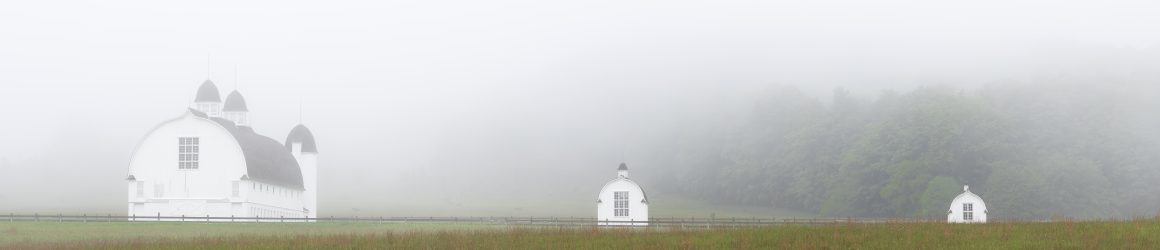
Earlier this week, I visited Sleeping Bear Dunes National Lakeshore. Initially, I set out to photograph on Esch Road Beach, but the cold temperature and high winds convinced me that I needed to find a spot sheltered from the wind. I made my way to Good Harbor Bay at the point where Shalda Creek empties into Lake Michigan.
Shalda Creek originates at the west end of Little Traverse Lake and winds its way through wetlands and the forest until it reaches Lake Michigan. I make a point of stopping there on almost every visit to check out the work of the beavers who are altering the landscape as they dam the creek and to enjoy the peaceful surroundings, which I usually have to myself. Notwithstanding the work of the beavers, the creek keeps flowing toward the lake making its mark on the land.
The force of the water continually adjusts the path of the creek as it approaches the lake. Each time I visit, the mouth of the creek has moved a little or a lot.
On Wednesday’s visit, I found the creek had formed a small depression in its path creating a mini-waterfall.
Over the weekend, I attended the opening of “The Sky Is Always There,” a new juried show at the Glen Arbor Arts Center. The Arts Center asked applicants to go beyond direct representation and portraits of puffy clouds “to consider the sky from its atmospheric characteristic to its mythic history.”
I was fortunate that my submission “Noctures” was accepted for the exhibit. Nocturnes is a triptych of photographs of the night sky that I printed as cyanotypes.
From left to right, the images are of a moonrise over Shalda Creek, the Milky Way over Port Oneida, and the northern lights over a farmhouse in Kirkjubæjarklaustur, a village in the south of Iceland.
I shared the inspiration for my entry in my Artist’s Statement: “When my children were young, we would lie on the shore of Sleeping Bear Bay at night and watch for satellites. Those moments when we marveled at the night sky have remained with me all these years. I wanted to recreate that sense of awe for this exhibit. More recently, my grandchildren and I created cyanotypes of leaves and twigs. We shared a similar sense of wonder as we watched the images coming to life in the developing tray. These experiences gave me the idea to process photographs of the night sky as cyanotypes for this exhibition.”
To create the cyanotypes, I converted my digital photographs to monochrome images and then reversed the tones to create digital negatives. Using a mixture of ammonium iron citrate and potassium ferricyanide, I treated hot-pressed, 100% cotton watercolor paper to sensitize it to UV light. Then I made a printed image from each negative by exposing the negative and paper to a UV light source. To deepen the blues, I bathed the final prints in hydrogen peroxide.
There are some remarkable works in the exhibit. If you are in the area of Glen Arbor this winter, I encourage you to stop by the Glen Arbor Arts Center and enjoy it. The exhibit runs through March 20.
As I write this, 2024 is quickly coming to a close. Time once again to look back and select some photos from this year that I especially like.
This year was a little different from previous years because my main photography focus for the year was researching and preparing two lectures that I delivered in November at the Osher Lifelong Learning Institute (“OLLI”) at Aquinas College. The lectures were titled, “Editing Reality: The History of Manipulated Photography.” The first lecture dealt with the period before the digital age, while the second began with the digital age and got into the consideration of the impact of artificial intelligence on photography. I had a blast doing the research, reading a wide range of sources and, though the lectures are done, my reading continues to focus on the history of photography.
Incidentally, I was honored that OLLI sought my permission to use my photographs on their Fall and Winter Course Catalogs.
I am principally a landscape photographer who shoots in what some have termed, “the eyewitness tradition.” I edit my photos to create a realistic image that truthfully presents how I saw what was before me when I clicked the shutter. I do not use generative artificial intelligence or insert items into my images that were not before me. That said, this year I experimented making multiple exposure and montage images. There were two that I particularly liked.
I created this first image from three exposures taken of the side of a dumpster at the East Grand Rapids Public Works Facility. I blended them together in Photoshop. I rather liked the result.
This tree is one of my favorites. Standing alone in a farmer’s field, it reveals its majesty. On the day I took this photo, the sky was cloudless. While the sun was shining and the sky was a beautiful blue, to my eye, the sky offered nothing of interest. Photoshop now allows one to replace the sky with a menu of clouds. Doing so seems disingenuous and certainly would violate the eyewitness tradition I adhere to. Rather than create an artificial photo and present it as real, I chose to try something a little different – a composite of two photographs, one the photo of the tree and the field, the other an image of the bark of a tree for the sky.
Earlier this year, the Glen Arbor Arts Center put out a call for entries to a juried show titled “The Sky is Always There.” The prospectus called for entries that “move beyond direct representation, beyond portraits of puffy clouds.” I was eager to try to get something accepted for the show, but my photography is very representational. I gave it much thought but was coming up empty. Then, after creating cyanotypes of leaves and twigs with my grandchildren I got the idea of submitting photographs of the night sky processed as cyanotypes for this exhibition.
I selected three digital images – a moonrise, the Milky Way, and the northern lights – to create a triptych. From the digital files, I created monochrome negatives of each image. I used a mixture of ammonium iron citrate and potassium ferricyanide to sensitize hot-pressed, 100% cotton watercolor paper to UV light. Then I made contact prints from each negative by exposing the negative and paper to a UV light source. To deepen the blues, I bathed the final prints in hydrogen peroxide.
I am pleased to say that the juror selected my entry for the exhibit, which will run from January 10 to March 20, 2025, at the Glen Arbor Arts Center in Glen Arbor, Michigan.
Here’s a selection of more straightforward images that are among my favorites for 2024:
“Sunrise on Sleeping Bear Bay,” Sleeping Bear Dunes National Lakeshore
“Hall Lake Morning,” Yankee Springs Recreation Area
“Lake Superior Lakeshore from Above,” Pictured Rocks National Lakeshore
“Lake Superior Stones,” George Hite Dunes, Eagle Harbor, Michigan
“Milky Way,” Port Oneida Rural Historic District, Sleeping Bear Dunes National Lakeshore
“Northern Lights over White Lake,” Wabaningo, Michigan
“Hanging On,” Teichner Preserve: The Leelanau Conservancy
“Fall Foliage,” Howard and Mary Dunn Edwards Nature Sanctuary, the Grand Traverse Regional Land Conservancy
“Turkey Tail and Maple Leaf,” Houdek Dunes Natural Area: The Leelanau Conservancy
In the coming year, I will continue to research the history of photography. Of particular interest to me are cabinet cards created in the second half of the 19th century. I will also continue to deepen my understanding of generative artificial intelligence and its impact of the art of photography. And, of course, I will continue to get out with my camera in an effort to capture nature’s beauty.
Happy New Year
Here are links to my my year-end review of images in 2019, 2020, 2021, 2022 and 2024.
As I write this on the tenth day of November, fall has entered its final stages. The trees are done showing off, no longer flashing their brightly colored leaves. Their branches are now mostly exposed, revealing the superstructure of the forest. I traveled to northern Michigan this past week to spend a couple of days exploring the woods, looking for smaller, more intimate scenes that seem to become more evident when the trees stop showing off.
Most of the ferns in the forest were brown and withered. But, at Misty Acres in the Borwell Preserve in Benzie County, I found this bulblet fern that had found sanctuary in the bark of a tree.
At the Houdek Dunes Natural Area in Leelanau County, my eye was attracted to the yellow plant and the green pine tree seemingly enjoying their time in the sun.
I came across these tiny fungi that had latched onto a birch tree. I believe they are called orange mycena.
The Teichner Preserve in Leelanau County is a small preserve on the shores of Lime Lake. There is a short trail that leads from the road to the lake and a spot I call the “Gathering Place.” There, the cedar trees are in a struggle to avoid succumbing to waves that erode the shoreline. Their roots intermingle as if they are holding onto each other for dear life.
I stopped at the Howard & Mary Dunn Edwards Nature Sanctuary in Grand Traverse County specifically to get photos of the larch trees. Larch trees are the only coniferous trees that lose their needles each year. Before doing so, they turn a vibrant yellow.
Along the pathway, I paused to take photos of the brightly colored leaves and needles that were still hanging on.
Here’s a couple of other things that caught my eye along the trail.
At Sunset Shore beach in the Sleeping Bear Dunes National Lakeshore, I took time to enjoy the setting sun as a stiff wind blew on shore. In the woods above the beach, I came upon this cedar that grew up around some boulders. All in all, a wonderful couple of days in nature.
I returned to Hall Lake this morning in the Yankee Springs Recreation Area. I had been there last week when I took this photo of the roots of a white pine tree.
Returning this morning I was treated to fog on the lake, which added some added interest to the photos.
As a result of a severe solar storm, a vibrant show of the northern lights appeared last evening in latitudes more distant than usual from the poles. The internet today is humming with photos from around the northern hemisphere. My wife and I drove about an hour from our home to Wabaningo, Michigan, to watch the show, and what a show it was. Here are some photos.
I will be presenting two lectures on the history of manipulated photography at Aquinas College this fall as part of the Osher Life Long Learning program. It is a topic that has interested me for many years. Almost since the invention of photography in 1839, photographers have manipulated photos. My lectures will delve in to the methods and reasons for this. The first lecture, which will be presented on Monday, November 18, 2024, will address the manipulation of photographs from 1839 to the age of digital cameras. The second lecture, on Monday, November 25, 2024, I will speak about the manipulation in the digital age, including the impact of artificial intelligence on our conception of the photograph.
Earlier this week, I spent an early morning at the Sleeping Bear Dunes National Lakeshore. On my monthly trips to Sleeping Bear, I usually leave home without a plan. When I reach Copemish, two hours into the three hour drive, I check the weather map and decide whether to take County Road 669 to Good Harbor Bay, County Road 677 (the old Benzonia Trail) to Glen Lake, or continue on M115 toward Frankfort to enter the park from the southern end. This week, I knew exactly where I wanted to go and traveled the country roads until I got to Bass Lake and Otter Lake, south of Empire.
Before the dawn on Otter Lake
Sunrise on Otter Lake
Bass Lake and Otter Lake are joined by a small stream. Water flows from Bass Lake into Otter Lake and from there into Otter Creek, which meanders its way to Lake Michigan at the Esch Road Beach. The area is home to a large number of eastern red cedar trees.
I wanted to visit the area to photograph the roots of cedars that had fallen over. Eastern red cedar trees generally have a network of lateral roots not far beneath the surface. As such, the the trees seem to be prone to tipping as the surface soil erodes. I am intrigued by the roots of fallen cedar trees, the way they twist together in the struggle to keep the tree erect. Torn from the ground and bleached in the summer sun, the roots become nature’s sculpture. Here are some of the images I took.
My photo “Exposed” is currently on display at the Glen Arbor Arts Center as part of its “Members Create” exhibit. The exhibit runs until August 8, 2024. The exhibit can be viewed online by following this link.
In the 1920s, photographer Man Ray began processing photographs using a process called solarization “to create a photograph that would not look like a photograph.” Ray created his solarized photos by exposing a photographic print in the wet darkroom to a brief flash of light. Solarization created an unpredictable reversal of tones giving a photograph an otherworldly quality. I attempted to recreate the effect in the digital darkroom by adjusting the tone curve on this photo of a cedar tree whose tap root has been exposed by erosion along the shore of Sleeping Bear Bay.