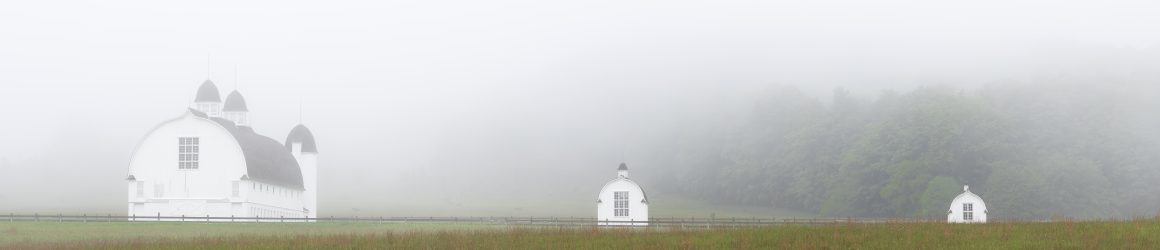
I had an opportunity to spend the night in Glen Arbor to do some night photography at the Sleeping Bear Dunes National Lakeshore. I had hoped to photograph the Milky Way, which is making its annual reappearance after wintering below the horizon. I did my homework, using the Photopills app to find a good viewing point, and checking six different models for the weather forecast. According to my research, if all went well, I would have clear skies between midnight and 1 a.m., when the Milky Way would be visible across the horizon at Sunset Shores Beach.
I visited Sunset Shores Beach on Thursday afternoon to scope out a place to set up later in the evening. Unlike Good Harbor Beach and Esch Road Beach, Sunset Shores Beach has some large stones, including an erratic boulder, which I hoped would make a nice point of interest for the foreground.
I came back to the beach to catch the sunset to make a few photos. If everything went as planned, Sunset Shores seemed like the perfect spot for photographing the Milky Way.
Well, the weather cooperated. The clouds didn’t roll in until after 1 a.m. But, apparently there was a little operator error in using my Photopills app to determine when the Milky Way would rise above the horizon. I didn’t see the Milky Way, but I had a wonderfully clear evening to try work on my night photography (a work in progress).
The erratic boulder did a nice job anchoring the foreground. And the ten-second exposure smoothed the waters of Lake Michigan. No Milky Way, but a nice shot of the celestial heavens. I’ll have to figure out what I did wrong for when I have another opportunity to enjoy the night sky at Sleeping Bear.
So far this year, Leelanau County (Michigan’s little finger) has had 124 inches of snow. I took advantage of this yesterday and visited Sleeping Bear Dunes National Lakeshore, making a random group of images.
As always, the sun came up yesterday, but it was hidden behind a blanket of dense clouds and blowing snow. Shortly after sunrise, I began taking photographs on Aral Road, a two-track that passes over Otter Creek. Setting up my tripod spooked the ducks that were floating in this old vestige of the mill pond that was here when the creek was dammed and a saw mill was located just a bit downstream.
Near the creek, a sumac tree was outlined in white.
I stopped by the Tweedle Farm. The red of its outbuildings and the rust on the silos stood out against the gray sky and white snow.
The Mill in Glen Arbor is an old grist mill on the Crystal River. It has been wonderfully restored and given new life with a couple of restaurants and great space to relax by the river.
I can’t stop taking photos of the granary on the Peter and Jenny Burfiend Farm in the Port Oneida Rural Historic District. The stark geometry and bright white of the granary make it stand out against the landscape, even when the landscape is covered with snow.
This is a photograph I took years ago of the Burfiend’s house that they built after establishing the farm in 1882.
I took this photo of the garage on the farm yesterday.
Across the field and beyond a swamp on the shore of Lake Michigan is the farm of Peter Burfiend’s father, Carsten, and mother, Elizabeth. There are several outbuildings on the farm, but only the foundations of the barn and silo remain.
On the way home, I stopped in the southern portion of the park where the Platte River flows into Lake Michigan. There I found a spot where the snow had blended with the sand of a dune between the river and the lake.
Earlier this week, I drove north to Sleeping Bear Dunes National Lakeshore, my old reliable spot for finding interesting things to photograph. I am sure that I pass many wonderful scenes as I make the three hour drive early in the morning, but Sleeping Bear has my heart and calls out to me in all seasons of the year.
The day was cold and windy. The combination of 20 degree temperatures (Fahrenheit) and winds gusting to 45 miles per hour, created a windchill that hovered in the single digits. Nonetheless, I headed to the beach to see how the shore ice had developed. On my last trip to Sleeping Bear, just two weeks ago, there was no shore ice. But the cold temperatures and high winds in the intervening days made all the difference. As I approached the beach from the parking lot at Esch Road and looked north toward Empire Bluff, I could see that the ice had indeed built up along the shore.
Waves crashed against the wall of ice. I thought of trying to capture some images of the waves, but realized that in the wind and the cold, I didn’t have the patience to stand in wait for the right wave to come along. Besides, once I got down to the shoreline, my view of the lake was blocked by the ice wall, so I could not see the action of the waves and could not anticipate when to trigger the shutter.
I decided that making images along the shoreline would be the order of the morning. Ice balls formed a ridge just feet from the shore, bringing to mind the spine of some ice creature laying in wait.
Along the shore, the sand cracked underfoot.
Otter Creek flows into Lake Michigan at the Esch Road Beach. I visited Otter Creek back in December, expecting to photograph images of snow and sand but was disappointed by the lack of snow. On my trip earlier this week, there was plenty of snow but Otter Creek itself was free of ice except along its shores.
Photographing in such bitter cold calls for some compromises. I returned several times to my car to change camera lenses. There was so much sand blowing in the wind that it would have been unwise to do so on the beach. I ended up leaving my glasses in the car since they kept fogging up. I had to trust my camera’s automatic focus because, without my glasses, I could not check critical focus on my camera screen. A number of images for which I used a slow shutter speed turned out to be blurry. Even on my tripod, my camera shook in the wind.
After a couple hours on Esch Road Beach, I drove to Sunset Shores Beach on Sleeping Bear Bay. The road to the parking area had not been plowed, requiring a short hike through a foot of snow to reach the stairway to the beach. The ice wall at Sunset Shores was not as large as the one at Esch Road, so I could look across the Manitou Passage to North and South Manitou Islands and could see the action of the waves.
At the base of the stairway to the beach, this cedar tree caught my eye. I liked how the pattern of the bark contrasted with the smooth, white snow. I decided that the image worked best in black and white.
The images I made on this trip were serviceable. None are really notable, but they testify to the beauty of the beach in winter. Even without a “prize-winning” image, I would mark the day big success. I enjoyed meeting the challenge of working in the bitter cold. Not surprisingly, I was the only person on both beaches. To have such a remarkable place to myself was a gem. I can’t wait to return.
I visited the Carl Creek Crossing Preserve in Ada, Michigan, today. A friend told me of this lovely little 8-acre preserve with a gentle stream passing through it. I arrived as the sun was rising. Here are some photos from my visit.
Grand Rapids is under the influence of an artic blast. Today’s high temperature was in the single digits and the windchill was around negative 10 degrees. A perfect day to visit Seidman Park and Honey Creek. Here are some photos from a chilly afternoon of photography.
Yesterday, I posted about my visit to Shalda Creek last week. That got me looking back at images I made in December on Esch Road Beach, where Otter Creek flows into Lake Michigan. In my past visits, Otter Creek flowed almost directly into the lake. Conditions have changed, however. Lake Michigan has dropped several inches in the last year, dipping about 5 inches below historic levels and expanding the beach. So the creek has had to cut a new path to the lake. I was surprised to see that the creek has taken a left hand turn and run parallel to the shore for about fifty yards before flowing into the lake.
I came to the beach hoping to make some abstract images of snow and sand mixing together similar to this photograph, which I took last January.
I liked the way the sand and the snow blended together. But, alas, this year there was no snow on the beach. I continued to scout around and found some interesting images along the shore of the creek.
Earlier this week, I visited Sleeping Bear Dunes National Lakeshore. Initially, I set out to photograph on Esch Road Beach, but the cold temperature and high winds convinced me that I needed to find a spot sheltered from the wind. I made my way to Good Harbor Bay at the point where Shalda Creek empties into Lake Michigan.
Shalda Creek originates at the west end of Little Traverse Lake and winds its way through wetlands and the forest until it reaches Lake Michigan. I make a point of stopping there on almost every visit to check out the work of the beavers who are altering the landscape as they dam the creek and to enjoy the peaceful surroundings, which I usually have to myself. Notwithstanding the work of the beavers, the creek keeps flowing toward the lake making its mark on the land.
The force of the water continually adjusts the path of the creek as it approaches the lake. Each time I visit, the mouth of the creek has moved a little or a lot.
On Wednesday’s visit, I found the creek had formed a small depression in its path creating a mini-waterfall.
Over the weekend, I attended the opening of “The Sky Is Always There,” a new juried show at the Glen Arbor Arts Center. The Arts Center asked applicants to go beyond direct representation and portraits of puffy clouds “to consider the sky from its atmospheric characteristic to its mythic history.”
I was fortunate that my submission “Noctures” was accepted for the exhibit. Nocturnes is a triptych of photographs of the night sky that I printed as cyanotypes.
From left to right, the images are of a moonrise over Shalda Creek, the Milky Way over Port Oneida, and the northern lights over a farmhouse in Kirkjubæjarklaustur, a village in the south of Iceland.
I shared the inspiration for my entry in my Artist’s Statement: “When my children were young, we would lie on the shore of Sleeping Bear Bay at night and watch for satellites. Those moments when we marveled at the night sky have remained with me all these years. I wanted to recreate that sense of awe for this exhibit. More recently, my grandchildren and I created cyanotypes of leaves and twigs. We shared a similar sense of wonder as we watched the images coming to life in the developing tray. These experiences gave me the idea to process photographs of the night sky as cyanotypes for this exhibition.”
To create the cyanotypes, I converted my digital photographs to monochrome images and then reversed the tones to create digital negatives. Using a mixture of ammonium iron citrate and potassium ferricyanide, I treated hot-pressed, 100% cotton watercolor paper to sensitize it to UV light. Then I made a printed image from each negative by exposing the negative and paper to a UV light source. To deepen the blues, I bathed the final prints in hydrogen peroxide.
There are some remarkable works in the exhibit. If you are in the area of Glen Arbor this winter, I encourage you to stop by the Glen Arbor Arts Center and enjoy it. The exhibit runs through March 20.
As I write this, 2024 is quickly coming to a close. Time once again to look back and select some photos from this year that I especially like.
This year was a little different from previous years because my main photography focus for the year was researching and preparing two lectures that I delivered in November at the Osher Lifelong Learning Institute (“OLLI”) at Aquinas College. The lectures were titled, “Editing Reality: The History of Manipulated Photography.” The first lecture dealt with the period before the digital age, while the second began with the digital age and got into the consideration of the impact of artificial intelligence on photography. I had a blast doing the research, reading a wide range of sources and, though the lectures are done, my reading continues to focus on the history of photography.
Incidentally, I was honored that OLLI sought my permission to use my photographs on their Fall and Winter Course Catalogs.
I am principally a landscape photographer who shoots in what some have termed, “the eyewitness tradition.” I edit my photos to create a realistic image that truthfully presents how I saw what was before me when I clicked the shutter. I do not use generative artificial intelligence or insert items into my images that were not before me. That said, this year I experimented making multiple exposure and montage images. There were two that I particularly liked.
I created this first image from three exposures taken of the side of a dumpster at the East Grand Rapids Public Works Facility. I blended them together in Photoshop. I rather liked the result.
This tree is one of my favorites. Standing alone in a farmer’s field, it reveals its majesty. On the day I took this photo, the sky was cloudless. While the sun was shining and the sky was a beautiful blue, to my eye, the sky offered nothing of interest. Photoshop now allows one to replace the sky with a menu of clouds. Doing so seems disingenuous and certainly would violate the eyewitness tradition I adhere to. Rather than create an artificial photo and present it as real, I chose to try something a little different – a composite of two photographs, one the photo of the tree and the field, the other an image of the bark of a tree for the sky.
Earlier this year, the Glen Arbor Arts Center put out a call for entries to a juried show titled “The Sky is Always There.” The prospectus called for entries that “move beyond direct representation, beyond portraits of puffy clouds.” I was eager to try to get something accepted for the show, but my photography is very representational. I gave it much thought but was coming up empty. Then, after creating cyanotypes of leaves and twigs with my grandchildren I got the idea of submitting photographs of the night sky processed as cyanotypes for this exhibition.
I selected three digital images – a moonrise, the Milky Way, and the northern lights – to create a triptych. From the digital files, I created monochrome negatives of each image. I used a mixture of ammonium iron citrate and potassium ferricyanide to sensitize hot-pressed, 100% cotton watercolor paper to UV light. Then I made contact prints from each negative by exposing the negative and paper to a UV light source. To deepen the blues, I bathed the final prints in hydrogen peroxide.
I am pleased to say that the juror selected my entry for the exhibit, which will run from January 10 to March 20, 2025, at the Glen Arbor Arts Center in Glen Arbor, Michigan.
Here’s a selection of more straightforward images that are among my favorites for 2024:
“Sunrise on Sleeping Bear Bay,” Sleeping Bear Dunes National Lakeshore
“Hall Lake Morning,” Yankee Springs Recreation Area
“Lake Superior Lakeshore from Above,” Pictured Rocks National Lakeshore
“Lake Superior Stones,” George Hite Dunes, Eagle Harbor, Michigan
“Milky Way,” Port Oneida Rural Historic District, Sleeping Bear Dunes National Lakeshore
“Northern Lights over White Lake,” Wabaningo, Michigan
“Hanging On,” Teichner Preserve: The Leelanau Conservancy
“Fall Foliage,” Howard and Mary Dunn Edwards Nature Sanctuary, the Grand Traverse Regional Land Conservancy
“Turkey Tail and Maple Leaf,” Houdek Dunes Natural Area: The Leelanau Conservancy
In the coming year, I will continue to research the history of photography. Of particular interest to me are cabinet cards created in the second half of the 19th century. I will also continue to deepen my understanding of generative artificial intelligence and its impact of the art of photography. And, of course, I will continue to get out with my camera in an effort to capture nature’s beauty.
Happy New Year
Here are links to my my year-end review of images in 2019, 2020, 2021, 2022 and 2024.